
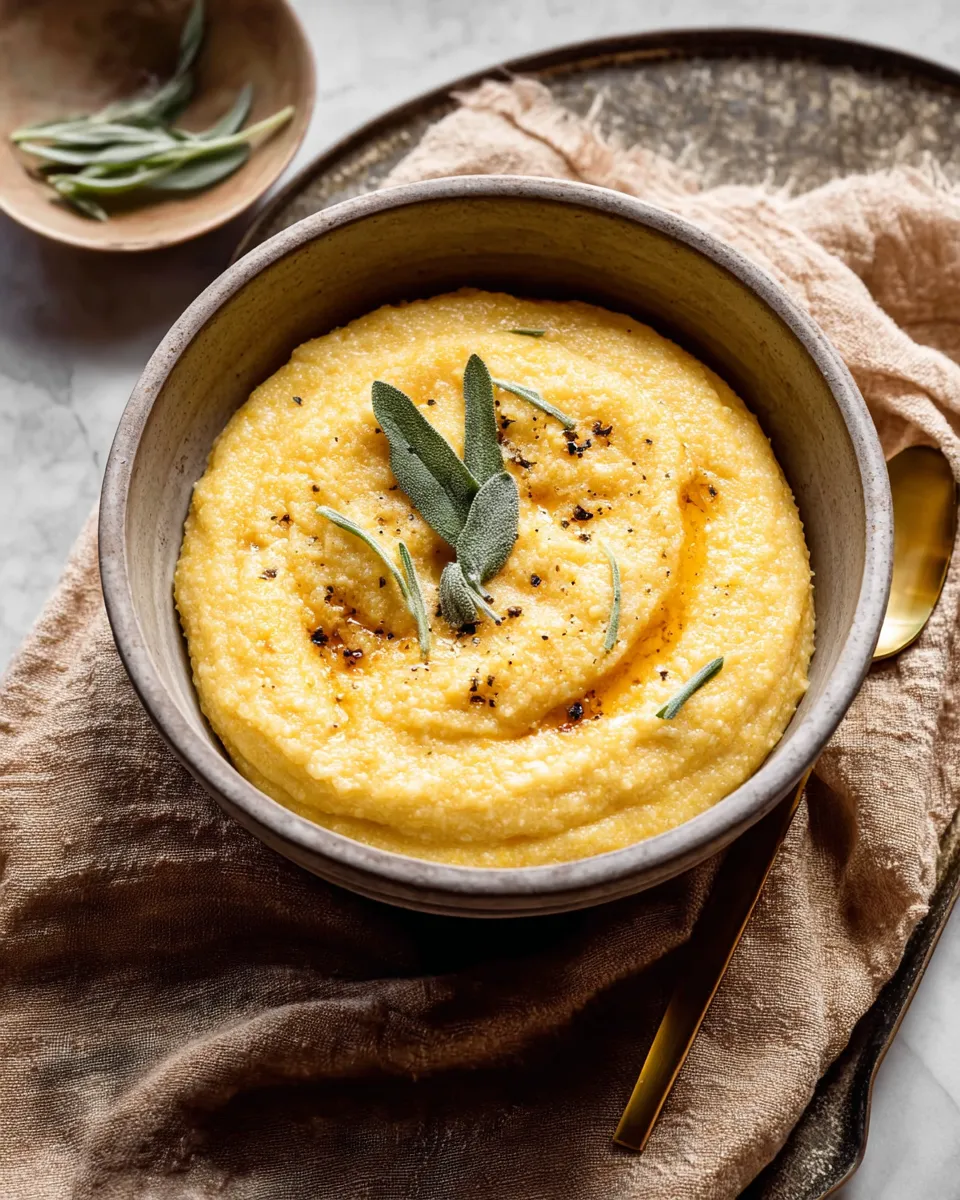
Golden Spoonfuls: A Short Love Note to Brown Butter and Sage Polenta recipe
This is the kind of recipe that hugs you from the inside — creamy polenta mellowed with nutty browned butter and brightened with crispy sage. It’s simple enough for a weeknight but special enough to serve when company arrives; think silky, warm, and wildly comforting.
Follow along and I’ll show you how to coax deep, toasty flavors out of a handful of pantry staples and turn cornmeal into something spoon-stopping. There’s a buttery aroma, a little crackle from fried sage, and a texture that’s spoon-friendly perfection.
Ingredients
- 1 cup coarse polenta (or medium-grind cornmeal) — Look for coarse or medium for the best texture; fine cornmeal makes a pastey result.
- 4 cups water (or 2 cups water + 2 cups milk for creamier polenta) — Milk adds richness; use unsweetened dairy or plant milk.
- 1 teaspoon fine salt — Adjust to taste; add later if using salty stock or cheese.
- 3 tablespoons unsalted butter — For browning; unsalted gives you control over seasoning.
- 8–10 fresh sage leaves — Crispy fried sage adds aroma and texture; brown, dry leaves are a sign they’re past their prime.
- 1/2 to 3/4 cup grated Parmesan or Pecorino Romano — Adds savory depth; swap for a tangy sheep’s milk cheese if you like.
- Freshly cracked black pepper, to taste — A final crack brightens the dish.
- Optional: 1/4 cup heavy cream or mascarpone — For extra silkiness; stir in off heat until melted.
- Optional: A pinch of chili flakes — For warmth; add while frying sage to infuse the butter.
Instructions
- Bring the liquid to a simmer. In a medium saucepan, heat 4 cups water (or water + milk) with 1 teaspoon salt until it gently simmers — small bubbles, not a rolling boil.
- Slowly whisk in the polenta. Reduce heat to low and pour the polenta in a steady stream, whisking to prevent lumps. You’ll see it thicken almost immediately into a soft, porridge-like consistency.
- Cook, stirring often. Let the polenta simmer gently for 20–25 minutes, stirring every 2–3 minutes to prevent sticking. It should pull away slightly from the sides and feel dense but spoonable. If it gets too thick, whisk in a few tablespoons of hot water.
- Brown the butter and crisp the sage. While the polenta cooks, melt 3 tablespoons butter in a small skillet over medium heat. Watch closely — the butter will foam, then the milk solids will turn golden and nutty. When it smells toasty and amber flecks appear, remove from heat. Add sage leaves to the warm butter and fry until they darken and crisp (about 20–30 seconds). Transfer leaves to a paper towel; reserve the brown butter.
- Finish the polenta. Off the heat, stir 1/2–3/4 cup grated Parmesan into the polenta until melted and glossy. If using cream or mascarpone, stir it in now for extra silkiness. Taste and adjust salt and pepper.
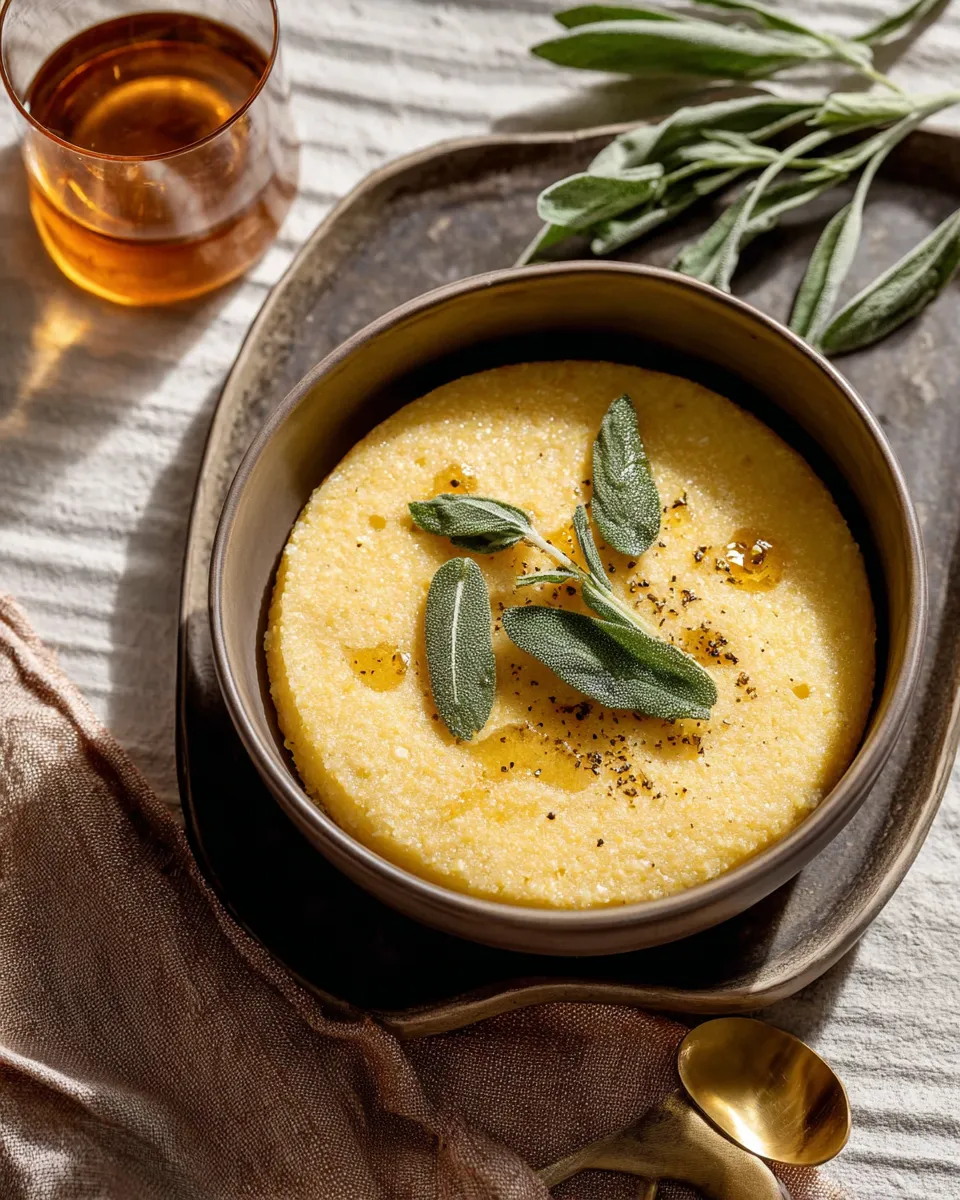
- Dress with brown butter and sage. Spoon the polenta into bowls, drizzle generously with the warm brown butter, and scatter the crispy sage on top. Add a final grind of black pepper and, if you like, a few extra shavings of cheese.
- Serve warm. Polenta is best hot and soft — it will thicken as it cools. If it sets before serving, reheat gently with a splash of water or milk and stir until creamy.
Tips & Variations
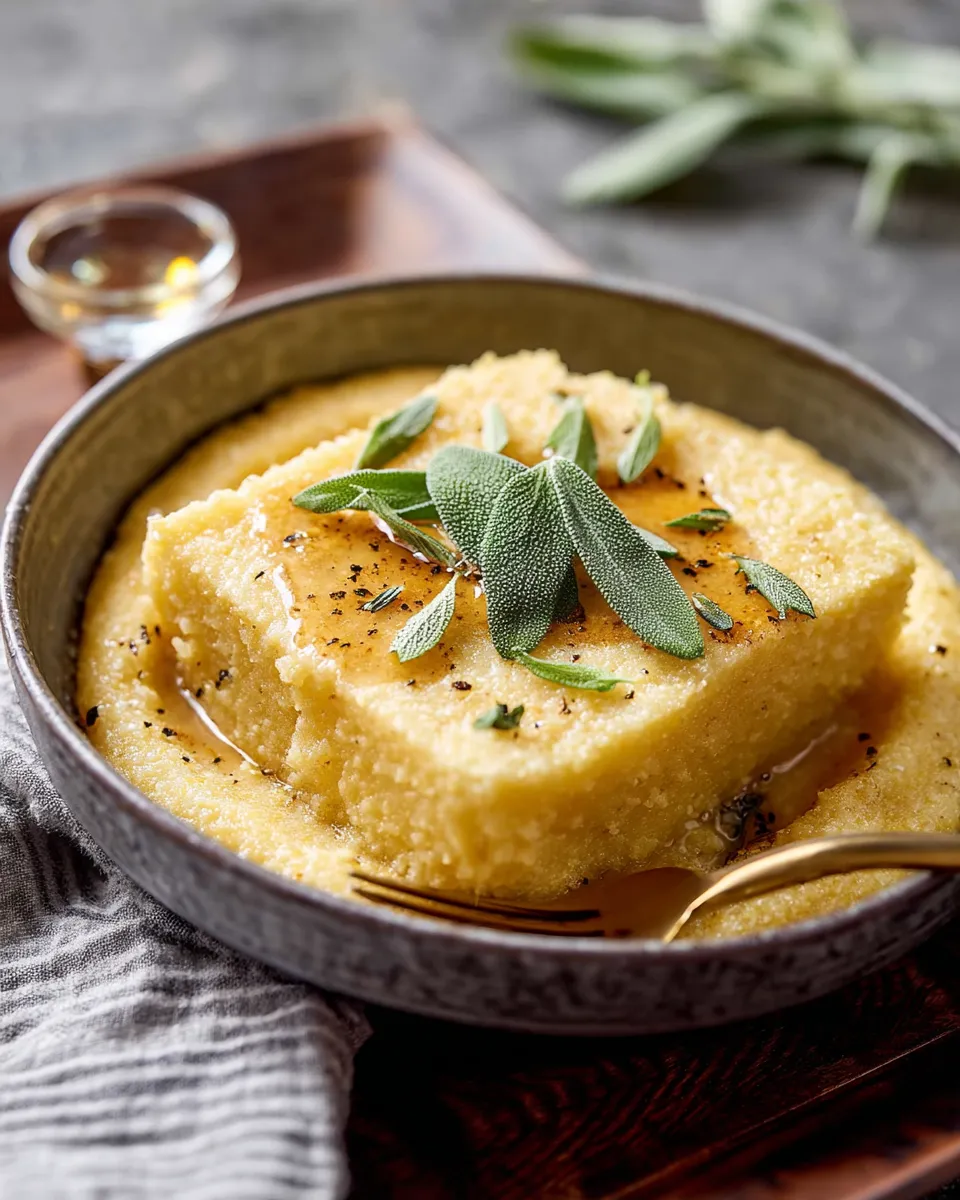
- Texture control: For softer polenta, use 5 cups liquid instead of 4. For a firmer set that can be sliced and grilled, use a 3:1 liquid-to-polenta ratio and chill until set.
- Butter options: Use browned olive oil for a dairy-free nutty note, or swap half the butter for olive oil and finish with grated nutritional yeast for a vegan version.
- Add-ins: Stir roasted mushrooms, braised greens, or slow-roasted tomatoes into the finished polenta for more body and flavor.
- Heat level: Add a pinch of red pepper flakes to the butter while browning, or finish with a few drops of Calabrian chili oil for smoky heat.
- Gluten-free: Polenta is naturally gluten-free — just ensure any added broths or cheeses don’t contain hidden gluten ingredients.
- Storage: Refrigerate leftovers in an airtight container for up to 3–4 days. Reheat gently on the stovetop with a splash of water or milk, stirring until smooth.
Serving Suggestions
- For an elegant plate: Spoon polenta into shallow bowls, top with sautéed mushrooms and a drizzle of extra brown butter. Garnish with microgreens or a few shaved Parmesan curls.
- Make it a meal: Serve alongside roasted chicken thighs, braised short ribs, or seared scallops for protein-forward dinners.
- Vegetarian pairing: Pair with lemony roasted broccoli, oven-roasted tomatoes, or a crisp kale salad tossed with toasted walnuts and a simple vinaigrette.
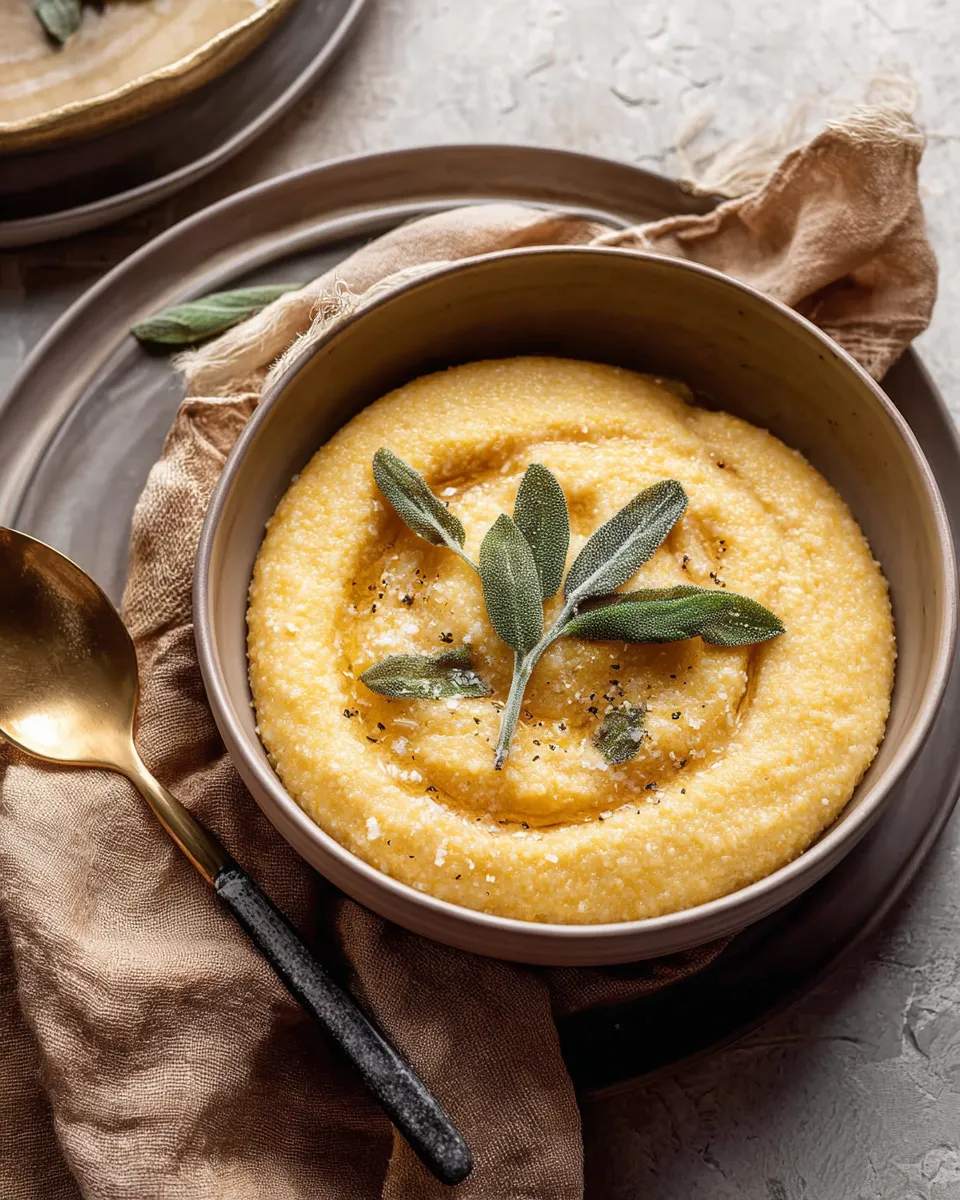
- Plating tips: Smooth the surface with the back of a spoon for a restaurant look, then create a shallow well in the center to hold the brown butter and crispy sage.
- Family-style: Keep polenta in a warmed casserole and let everyone spoon their own portions; top with different add-ins for variety.
FAQs
Why did my polenta turn out gluey or lumpy?
Gluey polenta usually results from using too-fine cornmeal, not enough stirring early on, or cooking at too-high heat. Use coarse or medium-grind polenta, add it slowly while whisking, and keep the simmer gentle. If lumps form, whisk vigorously or use an immersion blender for a moment to smooth things out.
Can I make polenta ahead of time?
Yes. You can make it, chill it in a shallow pan until set, then slice and grill or pan-fry. For spoonable leftovers, store in the fridge and reheat gently with a splash of water, milk, or cream until creamy again.
How do I reheat polenta so it stays silky?
Warm it slowly over low heat with a small amount of liquid (water, milk, or stock), stirring to reincorporate. A little butter or cream at the end helps restore a glossy, silky finish. Avoid high heat which can make it tighten and dry out.
Can I use instant polenta? How is it different?
Instant polenta cooks in minutes and is convenient, but the texture can be less toothsome than coarse polenta. If using instant, follow package directions and still finish with cheese and browned butter for flavor. You may need to adjust liquid amounts slightly.
What can I substitute for Parmesan to keep it dairy-free?
Use a splash of olive oil or browned olive oil plus nutritional yeast for a savory, cheesy note. A dairy-free grated alternative can also work, but taste and adjust seasoning since salt levels vary.
How do I keep the brown butter from burning while I finish the polenta?
Brown the butter in a separate small pan and watch closely — milk solids move quickly from golden to burnt. As soon as you smell a nutty aroma and see amber flecks, remove from heat. If you need the butter warm later, transfer it to a warm bowl so it won’t overcook in the pan.
Final Thoughts
Brown butter and sage transform humble polenta into something cozy and a little bit showy — easy to make, impossible not to love. Keep the technique simple: slow-cooked polenta, deeply browned butter, and crispy sage for contrast. It’s an all-season recipe that’s equally at home on a chilly night or a laid-back dinner with friends.
Give it a try, play with the add-ins, and remember: a little patience while stirring pays off in spoonfuls of comfort. Enjoy every buttery, herby bite.
Print
Brown Butter and Sage Polenta Recipe for Cozy Dinner Tonight
- Total Time: 35 minutes
- Yield: 4 servings 1x
- Diet: Vegetarian
Description
Make a cozy dinner tonight with a Brown Butter and Sage Polenta recipe creamy savory and done in 30 minutes simple steps for comforting flavor
Ingredients
Instructions
Notes
Creamy polenta mellowed with nutty browned butter and brightened with crispy sage. Simple enough for a weeknight, special enough for guests — silky, warm, and wildly comforting.
- Prep Time: 10 minutes
- Cook Time: 25 minutes
- Category: Side dish
- Cuisine: Italian
Nutrition
- Calories: 310 kcal
- Sugar: 2 g
- Fat: 18 g
- Carbohydrates: 30 g
- Fiber: 3 g
- Protein: 10 g
Keywords: polenta, brown butter, sage, comfort food, vegetarian, side dish