
A Little Slice of Sunlit Greece : Greek Honey Cake
Imagine a cake that smells like a citrus grove and a spice market at once: warm paper-thin crumbs soaked in a glossy honey syrup, flecked with orange zest and a whisper of cinnamon. This recipe is my quick, weeknight-friendly take on that classic honey-soaked Greek cake—comforting, not fussy, and absolutely addictive with a cup of strong coffee or late-afternoon tea.
It’s written for busy bakers who want big, soulful flavor without a long ingredient list. You’ll learn simple swaps, how to know your cake is ready by sight and touch, and the few little tricks that keep the honey syrup silky and not sticky-soggy. Let’s get baking.
Ingredients
- 3 large eggs (room temperature—they whisk up lighter and make a fluffier crumb)
- 1 cup (200 g) granulated sugar (balances the honey; swap with coconut sugar for nuttier flavor)
- 1/2 cup (120 ml) extra-virgin olive oil (classic Greek touch—milder-flavored oil or melted butter works too)
- 1/2 cup (120 g) plain Greek yogurt (adds tang and tenderness; dairy-free yogurt is fine for vegan swaps)
- 1 cup (160 g) fine semolina (gives that slightly coarse, pleasing texture typical of Greek cakes; use more flour if you don’t have it)
- 3/4 cup (95 g) all-purpose flour (for structure—swap 1:1 with gluten-free flour blend for GF version)
- 1 1/2 tsp baking powder (freshness matters—older powder can cause dense cake)
- 1/2 tsp baking soda (helps lift the semolina-flecked batter)
- 1/2 tsp ground cinnamon (warm background spice; cardamom is a nice alternative)
- Zest of 1 orange (brightens the honey—lemon zest can be used instead)
- 1 tsp vanilla extract (deepens flavor)
- Pinch of fine salt (balances sweetness)
- For the syrup: 3/4 cup (230 g) honey, 1/2 cup (120 ml) water, 2 tbsp sugar, 1 tbsp lemon juice, 1 cinnamon stick (gentle simmer brings out floral notes—substitute orange juice for a different aroma)
- Optional garnish: 1/2 cup toasted chopped walnuts or almonds (adds crunch and rustic look)
Instructions
- Preheat and prep:
Heat the oven to 350°F (175°C). Grease a 9-inch (23 cm) round or square pan and line the bottom with parchment. The cake will bake evenly in a shallow pan—this is key for syrup absorption.
- Whisk eggs and sugar:
In a large bowl, whisk eggs and sugar until pale and slightly thickened, about 2–3 minutes by hand (or 1 minute with a mixer). You want the mixture ribbon when you lift the whisk—this traps air for a lighter cake.
- Fold in liquids:
Add olive oil and yogurt, whisking until smooth. Stir in vanilla and orange zest—watch the batter take on a glossy sheen and a fragrant citrus lift.
- Combine dry ingredients:
In a separate bowl, sift together flour, semolina, baking powder, baking soda, cinnamon, and salt. Gently fold the dry mix into the wet until just combined—still slightly lumpy is okay; overmixing tightens the crumb.
- Smooth into the pan:
Pour batter into the prepared pan and smooth the top with a spatula. Tap the pan once on the counter to settle the batter and release big air bubbles.
- Bake until golden:
Bake 28–35 minutes. Visual cues: the top should be golden and spring back lightly when touched; a skewer inserted in the center should come out with moist crumbs (not wet batter). If using a darker pan, start checking at 25 minutes.
- Make the honey syrup while the cake bakes:
Combine honey, water, sugar, lemon juice, and a cinnamon stick in a small saucepan. Warm gently until the sugar dissolves, then simmer 4–5 minutes until slightly thickened and aromatic. Remove the cinnamon stick and keep warm—room-temperature syrup soaks best into warm cake.
- Syrup bath:
When the cake is out of the oven, poke the top gently with a skewer across the surface (about 10–12 holes). Pour the warm syrup evenly over the hot cake; you’ll hear a soft sizzle as syrup meets warm crumb. Let the cake rest at room temperature for at least 1 hour so it fully absorbs the syrup.
- Garnish and serve:
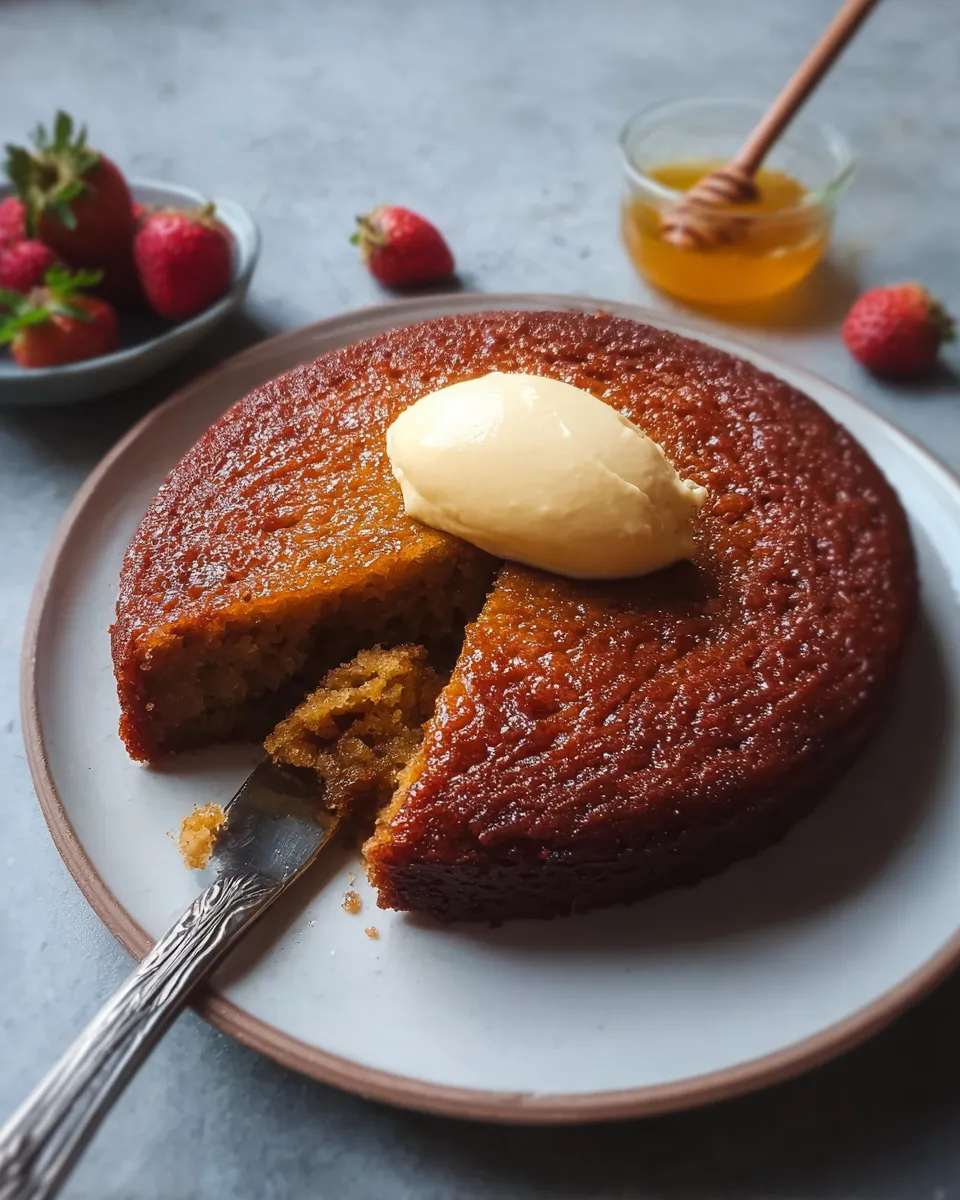
Sprinkle toasted nuts across the top and a little extra orange zest. Slice with a serrated knife for clean edges. The finished cake should be moist but not soggy, with a glossy honey finish on top.
Tips & Variations
- Make it gluten-free: Replace semolina and flour with a blend of 1 cup almond flour + 3/4 cup gluten-free 1:1 flour; add 1–2 tbsp tapioca for lighter texture.
- Vegan version: Use 3/4 cup aquafaba (whipped) or flax “eggs” (3 tbsp ground flax + 9 tbsp water) and swap yogurt for soy or coconut yogurt; use a mild oil to keep flavor balanced.
- Nutty twist: Fold 1/2 cup chopped toasted walnuts into the batter for texture and toasty flavor.
- Spice variations: Swap cinnamon for 1/4 tsp ground cardamom or add a pinch of cloves for depth.
- Syrup thickness: For a thinner glaze, simmer the syrup less; for a syrupy lacquer, simmer until it coats a spoon and forms a slow ribbon. Remember: thinner syrup soaks deeper, thicker syrup stays more on the surface.
- Storage: Keep in an airtight container at room temperature up to 3 days, or refrigerate up to 5 days. Warm gently before serving.
- Freezing: Freeze slices wrapped tightly in plastic and foil for up to 2 months. Thaw in the fridge and warm in a low oven.
Serving Suggestions
- Breakfast or brunch: Serve a warm slice with Greek yogurt and fresh berries for a bright, balanced plate.
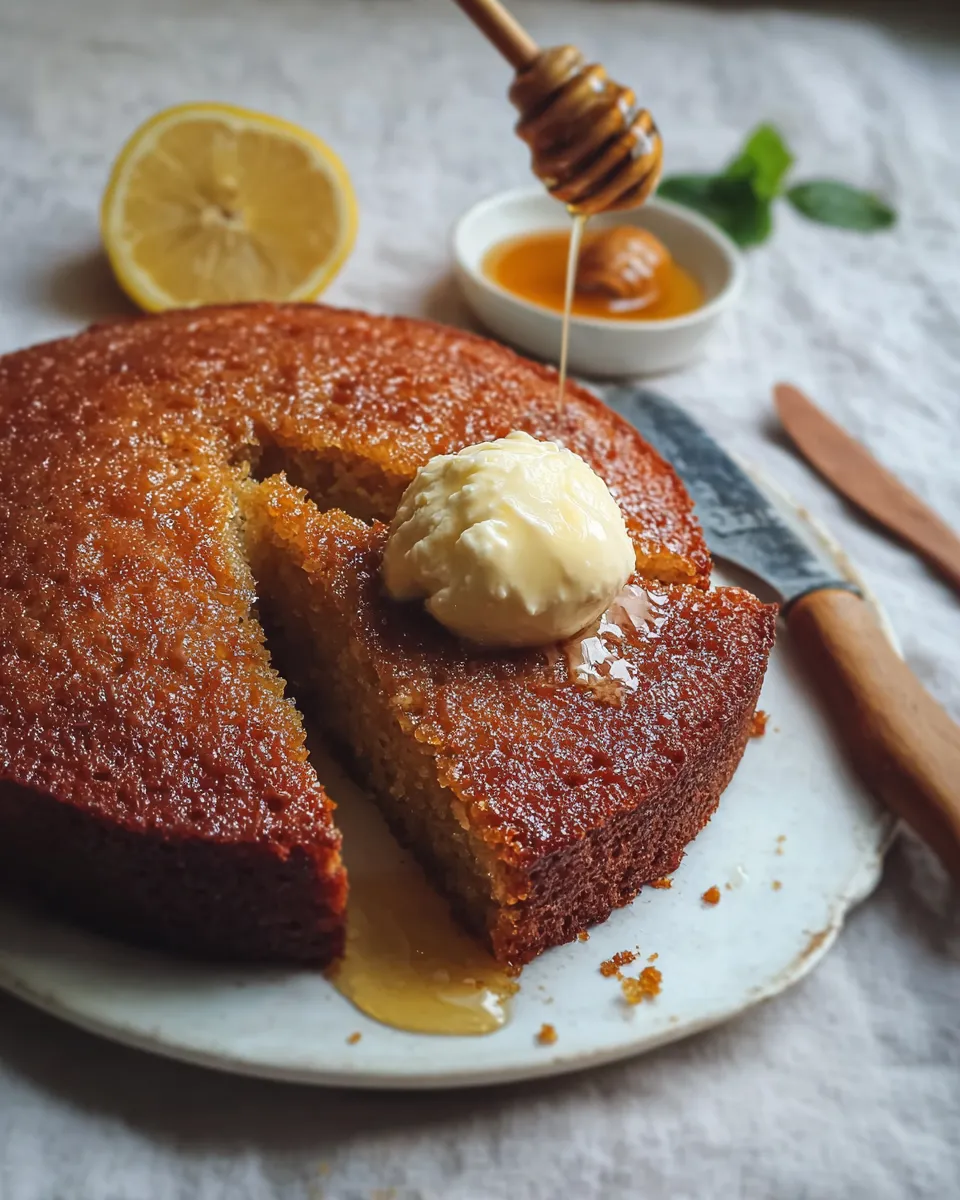
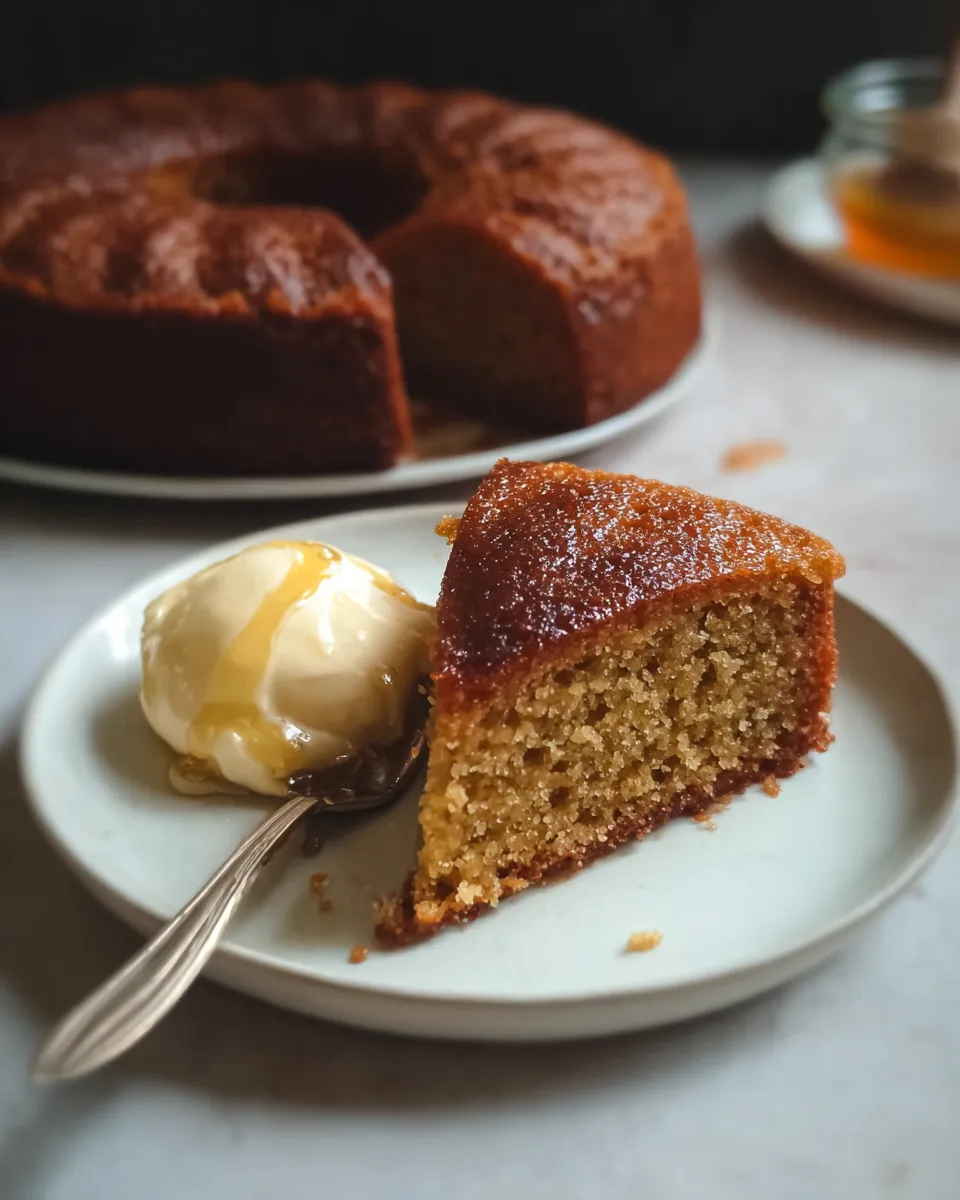
- Dessert: Add a scoop of vanilla or cinnamon ice cream and a drizzle of extra honey for contrast of hot and cold.
- Cheese pairing: Mild ricotta or mascarpone with a lemon zest sprinkle complements the cake’s honeyed warmth.
- Beverages: Pair with espresso, strong black tea, or a lightly spiced chai to play up the orange-cinnamon notes.
- Plating tip: Cut neat squares, dust with a light sprinkling of cinnamon, and scatter toasted nuts and a tiny orange wedge for color. Serve on warm plates to keep that honey-gloss inviting.
FAQs
Why is my cake dense after adding honey syrup?
If the batter was overmixed, gluten developed and made the cake tight. Also, pouring syrup that’s too hot onto a cold cake can collapse the crumb—always use warm syrup on warm cake and poke holes to help even absorption.
Can I make the cake ahead of time?
Yes—bake it a day in advance, pour syrup on the same day you plan to serve, and allow it several hours to settle. This actually helps flavors meld and improves texture the next day.
How should I reheat leftovers so they don’t get dry?
Warm slices in a low oven (300°F / 150°C) for 8–10 minutes or microwave a single slice for 15–25 seconds. If it seems dry, brush a little warmed honey or syrup over the top before serving.
Can I use a different sweetener for the syrup?
Yes—maple syrup or a mix of honey and maple works, though flavor changes. If using pure maple, reduce simmer time slightly since it’s thinner. Avoid straight sugar syrup as it lacks honey’s floral notes.
Do I need semolina, or can I use all flour?
Semolina adds a grainy, pleasing texture and the signature rustic mouthfeel of Greek honey cakes. You can use all-purpose flour only, but expect a softer, finer crumb—start with the same volume and adjust if batter feels too thick.
How do I keep the syrup silky and not crystallized?
Simmer gently (not boil hard) and add a splash of lemon juice to prevent crystallization. Store leftover syrup in a sealed jar at room temperature and re-warm gently before use.
Final Thoughts
This easy Greek-style honey cake is one of those recipes that feels special without needing a long to-do list. It’s forgiving—take small liberties with flour, oils, or spices based on what you have, and you’ll still end up with wedges of sticky-sweet, fragrant comfort.
Serve it warm, spoon on a little extra honey if you’re feeling indulgent, and enjoy the kind of slice that’s perfect for a cozy gathering or a quiet afternoon treat. Happy baking—and don’t forget to save a slice for coffee tomorrow morning.
Print
Easy Greek Honey Cake Recipe Simple Moist Delight Today
- Total Time: 2 hours
- Yield: 8–10 servings 1x
Description
Discover an easy Greek honey cake recipe that yields a moist syrupkissed cake in under an hour stepbystep tips to bake showstopping family favorite
Ingredients
Instructions
Notes
A quick, weeknight-friendly Greek-style honey cake: a moist semolina-flecked crumb scented with orange zest and cinnamon, finished with a glossy honey syrup. Comforting, forgiving, and ideal with coffee or tea.
- Prep Time: 15 minutes
- Cook Time: 35 minutes
- Category: Dessert
- Cuisine: Greek
Nutrition
- Calories: 380 calories
- Sugar: 28 g
- Fat: 18 g
- Carbohydrates: 50 g
- Fiber: 2 g
- Protein: 6 g
Keywords: Greek honey cake, semolina cake, orange cinnamon cake, syrup cake, easy Greek dessert