

There’s something about a bowl of creamy korma that feels like a warm hug after a long day. I still remember the first time I tried it — the gentle aroma of curry spices filling the kitchen, the coconut milk bubbling softly on the stove, and that first spoonful that instantly made me think, “Why haven’t I been making this at home all along?” If you’ve ever craved that restaurant-style richness but wanted something a little lighter, fresher, and completely meat-free, this vegetarian korma recipe is your new go-to.
What I love most about this dish (aside from how easy it is to make) is how customizable it can be. You can use whatever veggies you have in your fridge, tweak the spice level to your liking, and still end up with something restaurant-worthy in under 40 minutes. It’s cozy, creamy, and full of the kind of flavors that make you close your eyes with the first bite. For more inspiration on making flavorful vegetarian dinners at home, I also love browsing recipes from Minimalist Baker — their approach to plant-based comfort food is always spot-on.
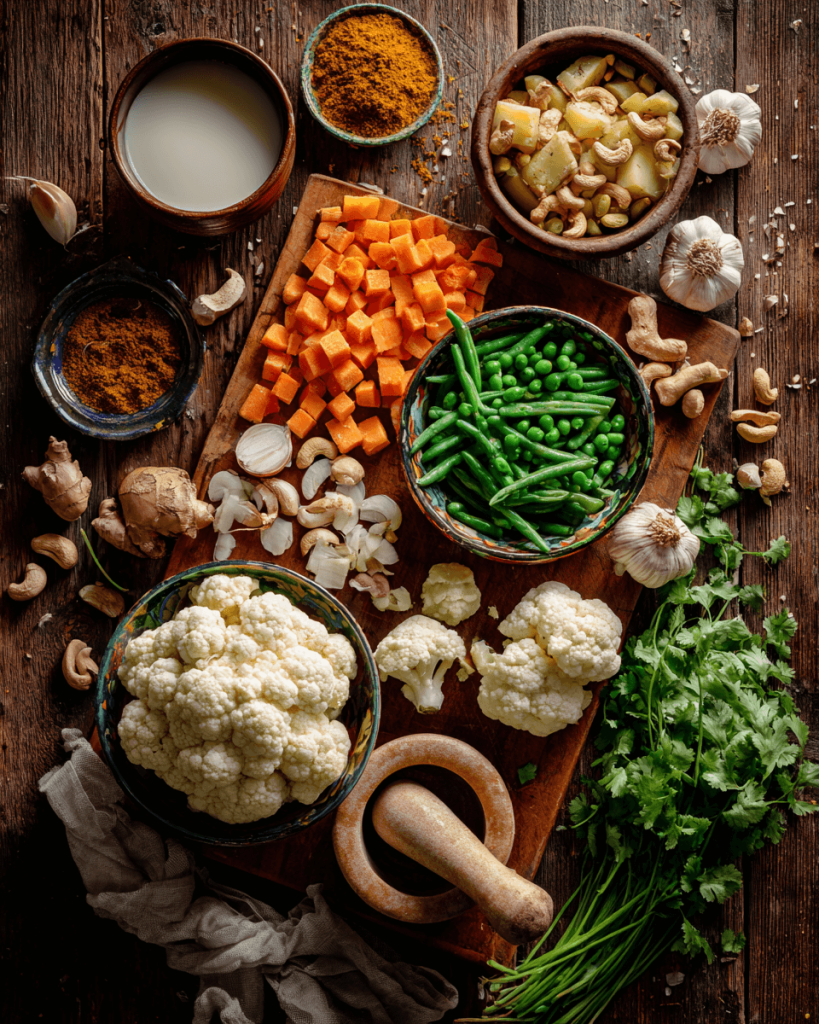
Ingredients for Creamy Vegetarian Korma
This vegetarian korma is all about layering flavors and creating a velvety, comforting sauce that perfectly coats the veggies. Here’s what you’ll need — along with a few handy tips for making it your own:
Vegetables
- 2 medium russet potatoes – peeled and diced; they add body and help thicken the sauce naturally.
- 2 medium carrots – sliced thin so they cook evenly and add subtle sweetness.
- 1 green bell pepper – for freshness and a slight crunch toward the end of cooking.
- 1 red bell pepper – balances the green with sweetness and color contrast (great for presentation!).
- ½ cup green peas – frozen or fresh; they pop beautifully against the creamy sauce.
Aromatics & Base
- 2 tablespoons oil or ghee – ghee gives a richer flavor, but olive or coconut oil works too.
- 1 large yellow onion, finely chopped – sauté until golden brown for that signature curry depth.
- 3 cloves garlic, minced – don’t skimp; it adds that irresistible warmth.
- 1 tablespoon fresh ginger, grated – brightens the dish and cuts through the richness.
Sauce Component
- 1 cup tomato sauce – gives the korma its lovely reddish hue and tangy base.
- 1 cup coconut milk – full-fat for creamy texture; light coconut milk works if you prefer less richness.
- ½ cup raw cashews – soak them before blending to make the sauce extra smooth and luscious.
- 1 ½ tablespoons curry powder – choose a mild or medium blend depending on your heat preference.
- 1 teaspoon salt – adjust to taste; it enhances every flavor beautifully.
- ½ teaspoon ground cumin (optional) – adds a slightly smoky, earthy undertone.
Garnishes & Finishing Touches
- Fresh cilantro or mint leaves – sprinkle before serving for a burst of color and freshness.
- Squeeze of lemon juice – brightens up the sauce right before serving.
- Cooked basmati rice or warm naan – essential sides for soaking up every drop of that silky korma sauce.
Instructions: How to Make Creamy Vegetarian Korma
This vegetarian korma comes together in layers — from the golden onions to the fragrant spices and silky coconut-cashew sauce. Take your time with each step, and let the kitchen fill with the kind of aroma that makes everyone wander in asking, “What’s cooking?”
Step 1: Prep the Cashew Sauce
Start by soaking your raw cashews in warm water for about 15–20 minutes. Once softened, drain and blend them with ½ cup of coconut milk until smooth and creamy. This will be your secret weapon for that velvety, restaurant-style texture later. Set aside — try not to taste it all now (it’s that good!).
Step 2: Sauté the Aromatic
In a large skillet or deep pan, heat oil or ghee over medium heat. Add the chopped onions and cook until golden brown and fragrant, about 6–8 minutes. Stir in the garlic and ginger, cooking for another minute until your kitchen smells amazing — that’s your flavor base!
Step 3: Build the Flavor Base
Add the curry powder, salt, and ground cumin (if using) directly to the pan. Toasting the spices for 30 seconds helps release their oils, deepening the flavor. Stir constantly so they don’t burn. Then pour in the tomato sauce, letting it simmer for 2–3 minutes until slightly thickened and rich.
Step 4: Add the Veggies
Now, toss in your diced potatoes and sliced carrots first since they take the longest to cook. Stir to coat them in the sauce, then pour in the remaining ½ cup coconut milk and ½ cup water. Cover and let it simmer gently for about 10–12 minutes, or until the potatoes are just tender.
Next, add your bell peppers and peas. Continue simmering uncovered for another 5–7 minutes, stirring occasionally, until all the vegetables are tender but not mushy. You’ll notice the sauce thickening and coating the vegetables beautifully.
Step 5: Stir in the Cashew Cream
Reduce the heat to low and stir in your prepared cashew-coconut mixture. This is where the magic happens — the sauce turns creamy, glossy, and full-bodied. Let it gently bubble for 3–5 minutes more to marry all the flavors. If it gets too thick, add a splash of warm water to loosen it.
Step 6: Taste & Finish
Give it a final taste test — add a pinch of salt or a squeeze of lemon juice to brighten everything up. Once done, remove from heat and sprinkle with fresh cilantro or mint leaves for that fresh, herbal finish.
Step 7: Serve & Enjoy!
Spoon the korma over fluffy basmati rice or serve it alongside warm naan. The sauce should cling to the rice like silk — rich, spiced, and comforting in every bite. This dish tastes even better the next day as the flavors continue to deepen overnight!
Tips & Variations for the Perfect Vegetarian Korma
Making a great korma is all about balance — the creaminess, the spice, the texture of the veggies — and a few smart tweaks can take it from good to unforgettable. Here are my favorite ways to customize, enhance, and even simplify this vegetarian korma recipe to match your taste, time, and pantry.
1. Customize Your Veggies
- Swap what you have: Broccoli, cauliflower, zucchini, or even sweet potatoes work beautifully here. The sauce is so forgiving that just about any veggie tastes amazing in it.
- Use frozen veggies: No shame in shortcuts — frozen mixed vegetables are perfect if you’re short on time. Just add them toward the end so they don’t get mushy.
- Add greens: A handful of spinach or kale stirred in right before serving adds color, nutrition, and freshness.
2. Adjust the Creaminess
- No cashews? Substitute with blanched almonds or sunflower seeds if you’re nut-free.
- Lighter option: Use light coconut milk or mix half coconut milk with half vegetable broth for a thinner, less rich sauce.
- Extra indulgent: For an ultra-creamy finish, stir in a spoonful of Greek yogurt just before serving (off the heat so it doesn’t curdle).
3. Control the Spice Level
- Milder version: Use a mild curry powder and skip any additional chili or cayenne.
- Spicier version: Add a pinch of red chili flakes or a ½ teaspoon garam masala toward the end for a warm, aromatic kick.
- Smoky flavor: Try adding a tiny bit of smoked paprika — it gives a subtle, tandoori-style depth.
4. Make It Ahead or Store It Right
- Meal prep magic: This korma tastes even better the next day. Store in an airtight container in the fridge for up to 4 days.
- Freezing tips: It freezes beautifully (without the peas or greens). Just thaw overnight in the fridge and reheat gently on the stove.
- Reheating trick: Add a splash of coconut milk or water when reheating to loosen the sauce back to its silky texture.
5. Flavor Upgrades for the Adventurous Cook
- Add crunch: Toasted cashews or slivered almonds sprinkled on top add texture and a lovely nutty note.
- Layered aroma: Drop a bay leaf or cardamom pod into the sauce while simmering for subtle perfume-like depth.
- Sweet touch: A few golden raisins stirred in right before serving give a sweet surprise that’s traditional in some Indian korma versions.

Serving Suggestions: How to Enjoy Your Vegetarian Korma
This vegetarian korma is the kind of dish that makes the table fall silent for a few moments — everyone taking that first bite, eyes widening at the creamy sauce and fragrant spices. Whether you’re serving it for a cozy weeknight dinner or a special weekend meal, here are some delicious, Pinterest-worthy ways to make it shine.
1. Classic Pairings
- Steamed Basmati Rice: The long grains soak up the rich sauce perfectly, keeping every bite balanced. For a little extra aroma, toss in a pinch of saffron or a few cardamom pods while cooking the rice.
- Fluffy Garlic Naan: Nothing beats tearing off a piece of warm naan and dipping it straight into that velvety curry. Try brushing it with melted butter and minced garlic for an irresistible twist.
- Brown Rice or Quinoa: For a wholesome, nutty base, serve your korma over cooked brown rice or fluffy quinoa. It’s hearty and great for meal prep.
2. Fresh Sides for Balance
- Cucumber Raita: A cooling yogurt-based side with cucumber, mint, and a pinch of cumin — it balances the spice beautifully.
- Indian Pickles (Achar): If you love tangy heat, a small spoonful of achar adds punchy flavor that contrasts the creamy sauce.
- Simple Salad: A crisp salad of cucumber, onion, and tomato with lemon juice and salt adds refreshing crunch to your meal.
3. Make It a Feast
- Serve your korma alongside other vegetarian favorites like lentil dal, chickpea curry, or spiced roasted cauliflower for a full Indian-inspired spread.
- Add a sweet touch at the end with mango lassi or cardamom rice pudding — both make for a dreamy finish.
4. Presentation Tips (Perfect for Pinterest!)
- Use a shallow white bowl or rustic ceramic dish to let the vibrant colors pop in photos.
- Garnish with fresh cilantro leaves, toasted cashews, and a drizzle of coconut milk for a creamy swirl effect.
- Add a few wedges of lime or naan slices on the side for texture and composition — your readers will want to pin it instantly!
FAQs: Your Vegetarian Korma Questions, Answered
I get it — once you’ve made a dish this good, you start thinking of all the ways to make it again, tweak it, or store it. Here are some of the most common (and helpful!) questions readers have about making this creamy vegetarian korma recipe at home.
1. Can I make this vegetarian korma vegan?
Absolutely! It’s already nearly vegan — just make sure to use oil instead of ghee, and skip any dairy-based add-ins like yogurt. Stick with coconut milk and your cashew sauce for that creamy texture.
2. What’s the best substitute for cashews if I have a nut allergy?
You can use sunflower seeds or silken tofu instead of cashews. Both create a surprisingly smooth sauce. If you use tofu, blend it with coconut milk until silky and add it during the last few minutes of cooking.
3. Can I make this recipe ahead of time?
Yes — and honestly, it tastes even better the next day. The flavors deepen beautifully overnight. Store your korma in an airtight container in the fridge for up to 4 days, or freeze for up to 2 months. Just reheat gently on the stove with a splash of coconut milk or water to loosen it.
4. How do I make it spicier (or milder)?
For more heat, add a pinch of cayenne pepper or chili flakes during the spice stage. To tone it down, use a mild curry powder and balance the flavors with a touch of coconut milk or sugar at the end.
5. Can I add protein to this vegetarian korma?
Definitely. Try tossing in chickpeas, tofu cubes, or even paneer for extra protein and texture. They soak up the sauce perfectly, making the dish even heartier without losing its creamy charm.
6. What should I do if my korma sauce turns out too thick or too thin?
If it’s too thick, simply stir in a few tablespoons of warm water or coconut milk until you reach your desired consistency. If it’s too thin, let it simmer uncovered for a few extra minutes — it will naturally thicken as the liquid reduces.
Final Thoughts: A Bowl of Comfort, Every Time
There’s something so satisfying about bringing a dish like this creamy vegetarian korma to the table — that moment when you lift the lid and see the steam curl up, the sauce thick and fragrant, flecked with golden spice and tender vegetables. It’s comfort food that feels both indulgent and wholesome, the kind of meal you’ll want to make again and again. And the best part? It’s easy enough for weeknights, but special enough to impress at a dinner party.
Cooking at home gives you the freedom to play — maybe you’ll swap the veggies next time, add chickpeas, or go a little heavier on the spice. No matter how you tweak it, you’ll end up with something rich, nourishing, and deeply satisfying. For more inspiration on building your own global comfort food recipes, check out Feasting at Home — their creative vegetarian dishes are an endless source of ideas.
Pin this recipe, save it for later, and make it your signature cozy dinner. Because once you’ve had a spoonful of this creamy korma, there’s really no going back to takeout.
Print
Creamy Vegetarian Korma Recipe (Better Than Takeout!)
Description
This creamy vegetarian korma is rich, comforting, and full of tender vegetables simmered in a luscious coconut-cashew sauce. It’s a restaurant-worthy Indian-inspired dinner you can make at home in under 40 minutes — cozy, flavorful, and perfect for meatless nights.
Ingredients
- 2 medium russet potatoes, peeled and diced
- 2 medium carrots, sliced thin
- 1 green bell pepper, chopped
- 1 red bell pepper, chopped
- ½ cup green peas (fresh or frozen)
- 2 tbsp oil or ghee
- 1 large yellow onion, finely chopped
- 3 cloves garlic, minced
- 1 tbsp fresh ginger, grated
- 1 cup tomato sauce
- 1 cup full-fat coconut milk
- ½ cup raw cashews (soaked 15 min, blended with ½ cup coconut milk)
- 1 ½ tbsp curry powder
- 1 tsp salt
- ½ tsp ground cumin (optional)
- Fresh cilantro or mint, for garnish
- Lemon juice, for serving
- Basmati rice or naan, for serving
Instructions
|
Notes
- – For a lighter version, use light coconut milk or mix half coconut milk with half vegetable broth.
- – To make it nut-free, use sunflower seeds or silken tofu instead of cashews.- For extra flavor, add a pinch of garam masala or smoked paprika near the end.
- – Tastes even better the next day as flavors deepen!