
A Cozy, Peppery Welcome
When the craving for something crowd-pleasing and warm hits, Nigerian chicken stew never fails to deliver. It’s bright, bold, and a little sultry from the pepper and tomato magic—a dish that makes the kitchen feel like a hug. I love how it tastes like Sunday and feels effortless enough for a busy weeknight.
This version leans into flexible heat, pantry-friendly tomatoes, and a glossy, savory sauce that clings to rice or fried plantains alike. It’s a comfort meal you can tailor: spicier, milder, richer with palm oil, or lighter with a neutral oil. Grab your skillet, and let’s build a pot that smells like home.
Ingredients
- 2 pounds bone-in chicken thighs, skin-on, trimmed.
Note: Bone-in gives richer flavor and juicier meat; for quicker cooking, thighs can be boneless, but keep skin on for moisture. - 2 tablespoons palm oil (or 2 tablespoons neutral oil).
Note: Palm oil delivers the signature red hue and depth; substitute with olive or canola if you prefer. - 1 large onion, diced.
Note: Sweats into sweetness that balances acidity; red onion adds color if you have it. - 3 cloves garlic, minced.
Note: Fresh garlic boosts aroma; you can crush instead of mince for a stronger bite. - 1 tablespoon fresh ginger, grated.
Note: Ginger adds brightness; substitute with 1 teaspoon ground ginger if needed. - 2 cups crushed tomatoes (or 4 ripe tomatoes, blended) plus 2 tablespoons tomato paste.
Note: Paste deepens flavor and thickens the sauce; if using only fresh tomatoes, you may need a touch more time for reduction. - 2–3 hot peppers (scotch bonnet or jalapeño), minced.
Note: Seeds equal more heat; remove seeds for milder heat and adjust to taste. - 1 teaspoon dried thyme.
Note: Classic herbal note; oregano can substitute if you’re out of thyme. - 1/2 teaspoon paprika or curry powder.
Note: Adds warmth and color; skip if you prefer a purer tomato season. - Salt and black pepper to taste.
Note: Start conservative; you can always add more at the end. - 1 cup chicken broth or water.
Note: Use GF broth if needed; adjust for sauce consistency. - 1 red bell pepper, diced (optional).
Note: Adds sweetness and color; stir in near the end for crisp texture. - Fresh cilantro or parsley for garnish (optional).
Note: Green finish brightens the dish just before serving.
Instructions
- Season the chicken generously with a pinch of salt and pepper. If you like a deeper color, dust lightly with paprika or a pinch of curry powder.
- Heat the palm oil in a heavy-bottomed pot over medium-high heat. Add the chicken in batches and brown on all sides, about 4–5 minutes per batch. Transfer to a plate and set aside.
- In the same pot, add the chopped onion. Sauté until it turns translucent and starts to sweeten, 5–7 minutes. Add garlic and ginger; cook until fragrant, about 1–2 minutes more.
- Stir in the minced hot peppers and tomato paste. Cook for 1–2 minutes to bloom the flavors and deepen the color.
- Pour in the crushed tomatoes (and any juices) and whisk to combine. Return the chicken to the pot along with the thyme, paprika, and a pinch more salt if needed. Add the broth and bring to a gentle simmer.
- Simmer uncovered for 25–35 minutes, until the chicken is cooked through (internal temp about 165°F/74°C) and the sauce thickens to coat the back of a spoon. If the sauce reduces too quickly, add a splash more broth.
- Stir in the red bell pepper (if using) in the last 5 minutes for a fresh pop of color and crunch. Taste and adjust salt and heat as desired.
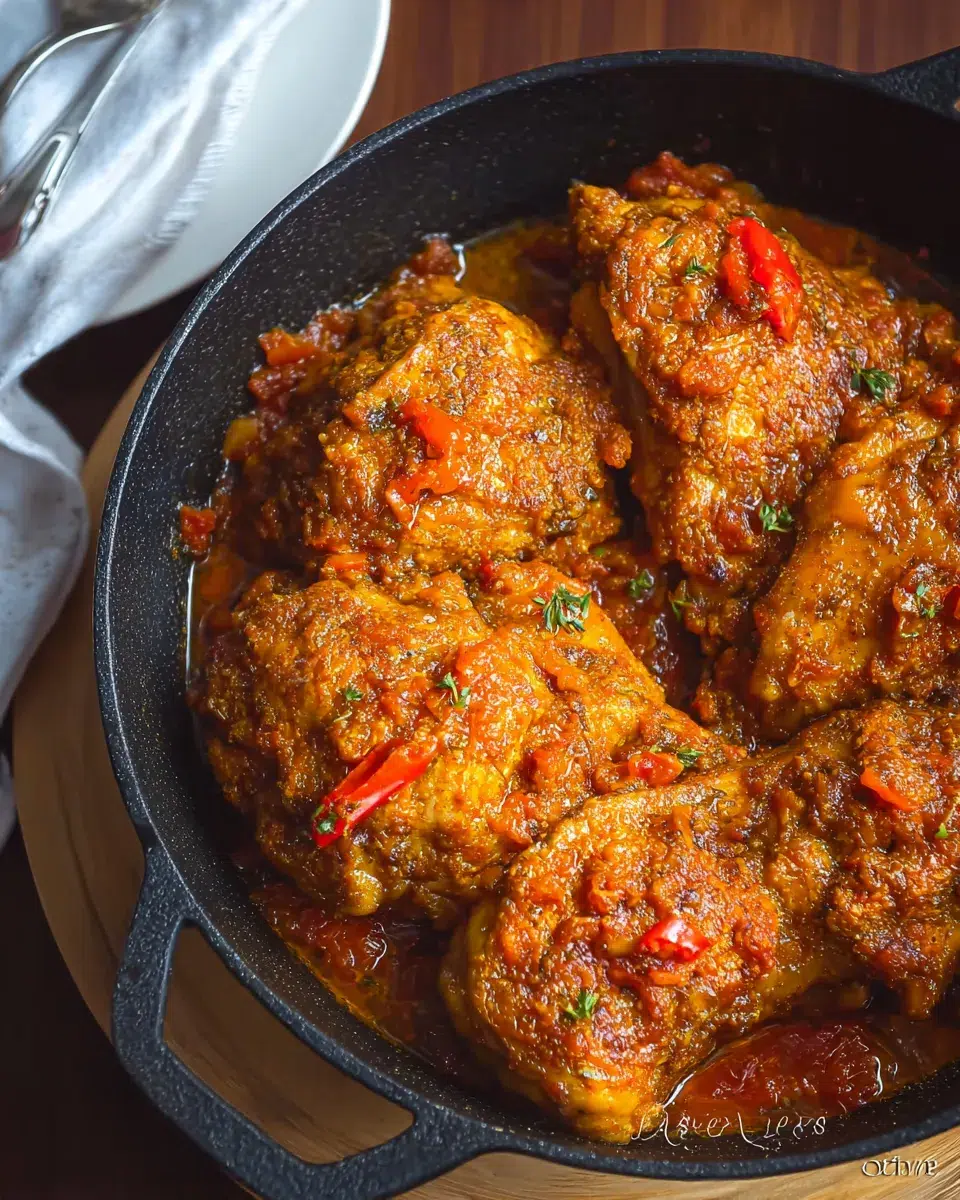
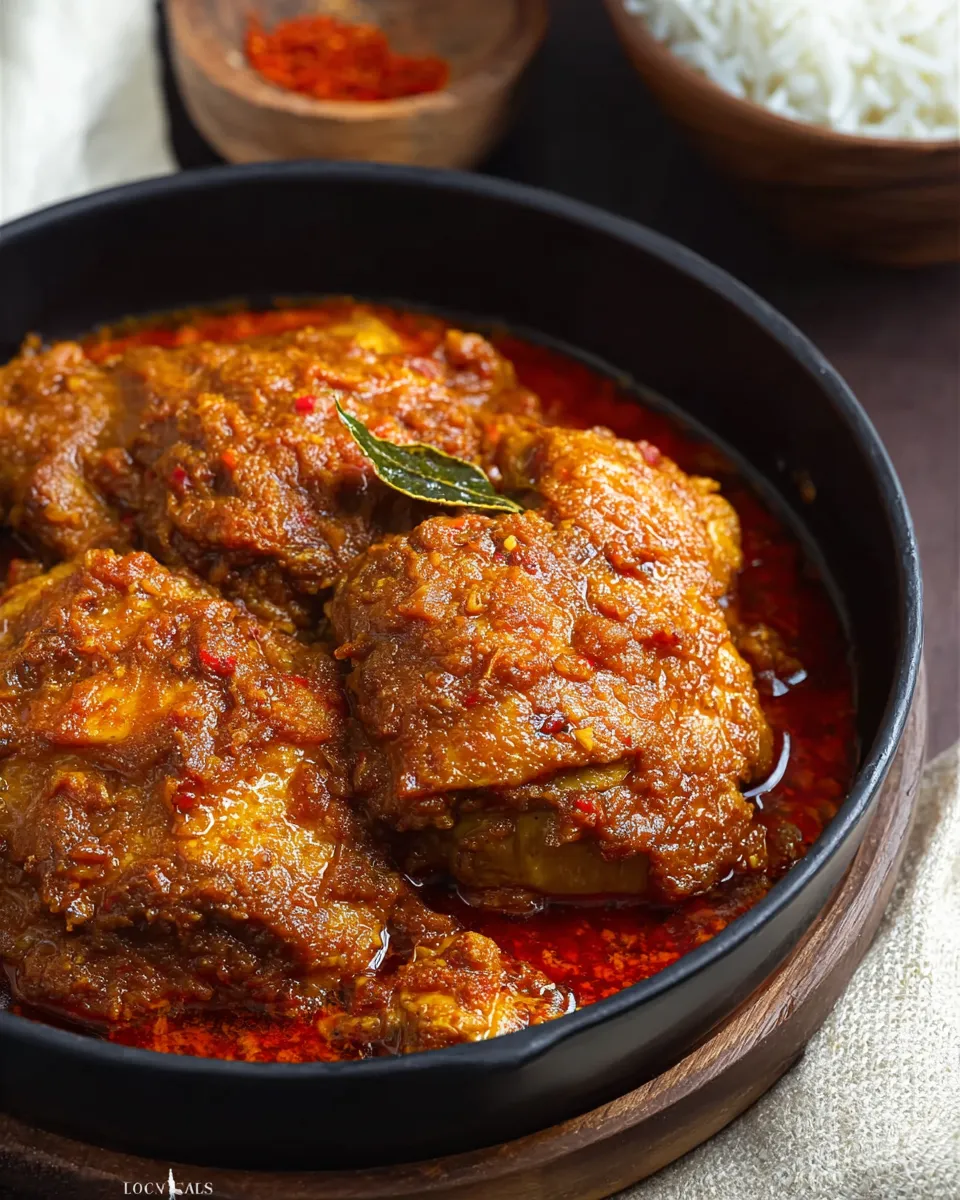
- Serve hot over white rice, fried plantains, or boiled yams. The sauce should be glossy, richly red, and clinging to your spoon and plate alike.
Tips & Variations
- Spice control: For more heat, keep the seeds and membranes in the peppers; for milder heat, remove them and/or opt for jalapeños. You can also dust with a pinch of cayenne at the end if you want a quick kick.
- Oil choices: Palm oil gives a traditional look and flavor; if you’re avoiding it, use sunflower, olive, or canola oil. Expect a lighter color and slightly different finish.
- Stock matters: Use good-quality chicken stock for depth; if you’re short on time, a dense broth works fine, but skip water alone if possible to keep the sauce rich.
- Make-ahead magic: The flavors deepen after a day in the fridge. Reheat gently on the stove, adding a splash of water or broth if the sauce thickens too much.
- Thickening options: If you like a thicker sauce, uncover and simmer longer to reduce, or whisk in 1 teaspoon cornstarch mixed with 1 tablespoon water for a quick slurry.
- Allergy-friendly: This dish is naturally gluten-free when using gluten-free stock. Always check your tomato paste and broths for any hidden thickeners if you’re cooking for sensitive eaters.
- Flavor boosters: A squeeze of lime or a handful of chopped fresh herbs at the end brightens the plate. A dash of smoked paprika adds a subtle, woody note.
Serving Suggestions
- Classic pairing: Serve over fluffy white rice or coconut rice for a comforting, classic presentation.
- Alternative sides: Try fried plantains, steamed vegetables, or boiled yams for a hearty meal.
- Plate like a pro: Spoon the sauce over the grains, then scatter chopped herbs and a few pepper slices for color.
- Make-it-a-meal: Add a side salad (cucumber-teta) or a simple mixed greens dish to balance the richness.
FAQs
Can I thicken the sauce if it’s too watery?
Yes. Simmer uncovered to let it reduce and concentrate, or whisk in a small amount of cornstarch slurry (1 teaspoon cornstarch mixed with 1 tablespoon water) and simmer for another minute until glossy and thickened.
Can I make this ahead?
Absolutely. The stew tastes even better the next day. Cool completely, refrigerate up to 3–4 days, and reheat gently on the stove, adding a splash of broth if needed.
How do I reheat leftovers without breaking the sauce?
Warm slowly over low heat, stirring occasionally. If the sauce looks separated, whisk vigorously or add a teaspoon of tomato paste to re-emulsify and restore glossiness.
Can I use pasta with this dish?
While it’s traditionally served with rice, you can spoon the sauce over cooked pasta for a hearty fusion. A short pasta like penne or rigatoni works well to catch the sauce.
What swaps can I make for palm oil?
Use olive, canola, or sunflower oil. The color will be lighter and the flavor a touch different, but the dish remains richly satisfying.
How can I keep the sauce silky and not split?
Use medium heat to avoid scorching, avoid adding acidic ingredients too early, and ensure you sear the chicken well at the start to render flavorful fond. If separation occurs, a quick whisk or a touch of tomato paste helps rebalance the sauce.
Final Thoughts
This Nigerian chicken stew is a cozy, crowd-pleasing staple that thrives on simple pantry ingredients and a big spoonful of heart. It’s easy to customize to your heat preference and pantry, yet it still feels like a celebration in a pot. Grab a plate, offer a little extra sauce for dipping, and savor the warmth of this comforting kitchen staple.
Print
Nigerian Chicken Stew Authentic Easy Recipe for Weeknights
- Total Time: 1 hour 5 minutes
- Yield: 4 servings 1x
Description
NIGERIAN CHICKEN STEW made simple for weeknightsauthentic flavors quick steps and a comforting finish youll crave ready in minutes Try it tonight
Ingredients
Instructions
Notes
A cozy, peppery Nigerian chicken stew with a glossy tomato sauce, pantry-friendly heat adjustments, and versatile serving options over rice, plantains, or yams.
- Prep Time: 20 minutes
- Cook Time: 45 minutes
- Category: Main dish
- Cuisine: Nigerian
Nutrition
- Serving Size: 4 servings
- Calories: 420 calories
- Sugar: 12 g
- Fat: 20 g
- Carbohydrates: 25 g
- Fiber: 4 g
- Protein: 28 g
Keywords: Nigerian chicken stew, peppery stew, palm oil, tomato sauce, Nigerian cuisine, main dish